
WRC
NEPA
What began almost five decades ago as a small whisper network has grown to a wide web of openly distributed information, and what’s being shared is as necessary and important as ever. Most people who need WRC’s services find them through word of mouth. “We also have our website, we have community partners, the police refer to us, as does the district attorney’s office,” explains Nancy Perri, grants & education program director at WRC, previously known as The Women’s Resource Center. “But all through the community, people are aware of us. It’s common for someone to say, ‘Since WRC helped me, you should call them.’ A lot of times we hear from people who say that a friend told them to call and now we even have kids going home from learning with us at school programs and telling their parents that they should call and get help.”
When the Youth Empowerment programs first began, WRC even received a phone call from a teacher at one of the schools where they’d been providing outreach education, who’d realized through listening to the lesson her students were being taught that her own relationship was unhealthy. “The next year, the teacher was telling us how glad she was for the whole experience and that it had been the best possible thing for her and her child,” Perri shares.
For almost 50 years, WRC has been working to eliminate domestic violence and sexual abuse through advocacy, education, and systemic change while empowering survivors in Lackawanna County, as well as Susquehanna, a small rural community that borders New York state. “When I started here, there were five of us,” explains Peg Ruddy, who has been the executive director of WRC since 1992. The staff has grown to 45 individuals, with many, like Ruddy, staying on for years. WRC even has four sets of parent-child duos who work within the organization.
WRC was started back in 1975 by a group of women who all volunteered in the community and wanted to understand and study how alcoholism related to women. “They got a small grant from the county, around $10,000, and they did a needs assessment,” says Ruddy. “What they found during that study was that the alcohol issue was real, however, the biggest problem that was identified was from women who were being abused in their home. So the women volunteers got a board together and incorporated in 1976. This was all during a time in our country, from San Francisco to Pittsburgh, that there were groups of feminist women getting together to organize to stop violence against women. And we became part of that movement, that moment.”
Over the years, WRC has continued to grow to meet community needs, but the backbone of their work is their 24-hour hotline. They also have a counseling program and legal advocacy program staffed with attorneys that assist survivors in civil matters related to domestic and sexual violence. Both Perri and Ruddy are also especially proud of their prevention program, which sends WRC into schools to educate young people about how to have a healthy relationship. “We talk about what to do if there’s red flags. We talk about who they should talk to, or how to help a friend if they’re seeing a bad situation from the outside,” Perri clarifies.
WRC also used to run a traditional shelter, but the organization shut down that part of their work 13 years ago, moving instead to a housing-first model where they help survivors and their children get into an apartment. WRC then pays the rent for a year. “We’ve recently had three survivors able to save enough money to buy their own homes,” Ruddy shares proudly. “McGowan has been so supportive of this work, and it’s made a huge impact. Long-term change is what we hope for and it’s really important that we learn from survivors. That’s been one of our main values through the years, partnering with survivors to make sure they get their needs met.”
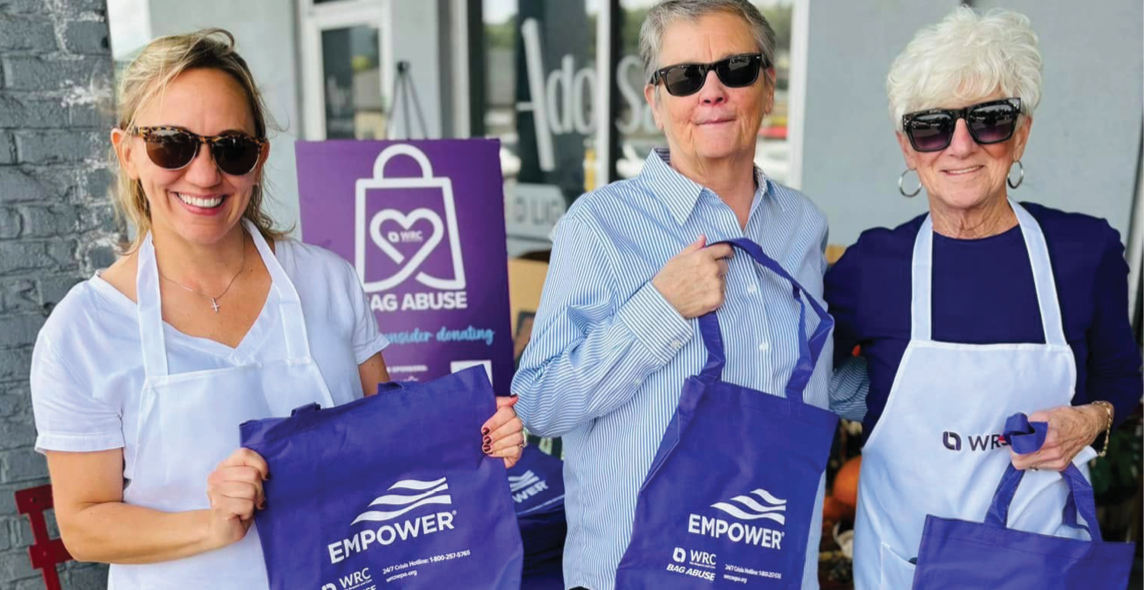
Even with the positive impact WRC has made on their community, there is still more work to be done. WRC continues to raise funds and get the word out through yearly events like Great Chefs, Bag Abuse, and Santa’s Snippers. “There was a woman, a survivor, who was in an executive leadership position at Revlon, and she recognized that before formal services like ours were available, women would talk to their hairstylists about their intimate lives,” Perri explains. “And so, on the first Sunday of every December, we offer haircuts to raise money to provide critical resources for survivors of domestic violence and sexual assault.”
Santa’s Snippers is also an opportunity to reflect back on a time when a hushed conversation between client and stylist was one of very few ways to help change a life, as WRC continues to remind survivors of their strength and the bright futures that lie ahead for them.
5 Years Later
“Our numbers finally did go down this year, and though we certainly saw a rise because of COVID, part of me wants to say, anecdotally, that the drop in people needing our services is because the prevention program is working, people are learning from us, and there’s less unhealthy relationships out there.”
—Peg Ruddy